Most people view time as a straight line. Seconds become minutes, hours turn into days, and life moves forward according to digital clocks.
In Bali, time works differently. Local traditions follow sacred calendars that assign unique spiritual qualities to different days. Specific moments suit building a house, starting a journey, or holding a temple ceremony.
Understanding Madewasraya bali requires looking past standard calendars and exploring how traditional Balinese cosmology aligns human life with larger spiritual cycles.
Two Distinct Ways of Measuring Time
While Western calendars move strictly in a straight line, traditional Balinese time moves through overlapping cycles:
— Solar Calendars: Modern society relies on a standard 365-day solar calendar for daily business.
— Sacred Calendars: Balinese priests consult traditional multi-layered calendars to track spiritual forces.
— Intersecting Cycles: Overlapping calendar cycles create specific moments with distinct spiritual energy.
— Cosmological Alignment: Priests evaluate these intersecting cycles to determine when human actions should occur.
This ancient calendar system helps explain why Balinese culture places so much importance on exact timing for major rituals.
Why Madewasraya Returns to Kintamani in 2026
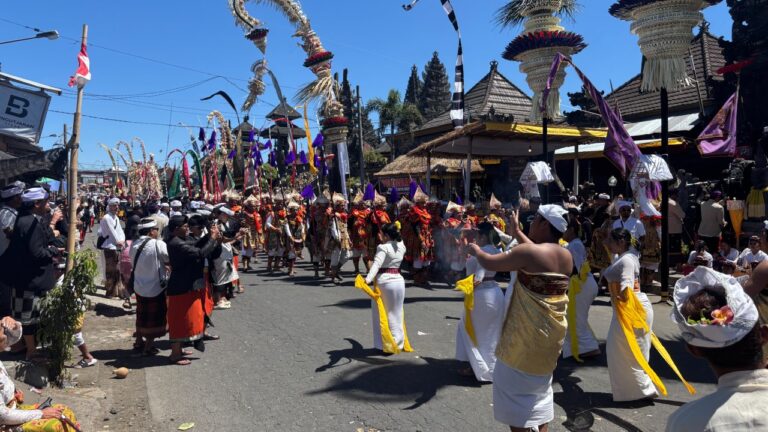
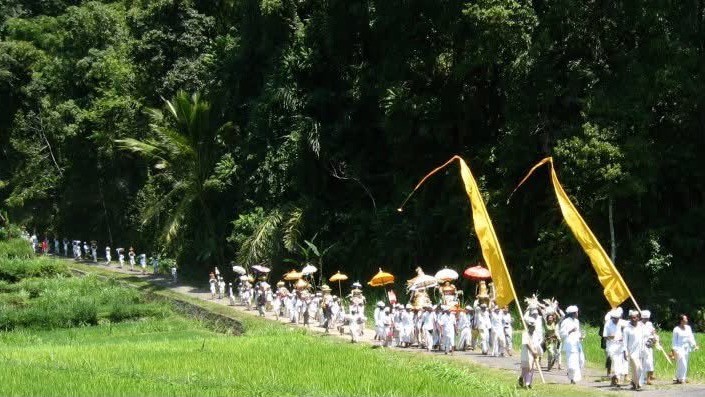
The last major Madewasraya ceremony occurred in 2006, when tens of thousands of devotees gathered at Pura Tuluk Biyu in Kintamani. That gathering offered spiritual balance following the traumatic island bombings of 2002 and 2005.
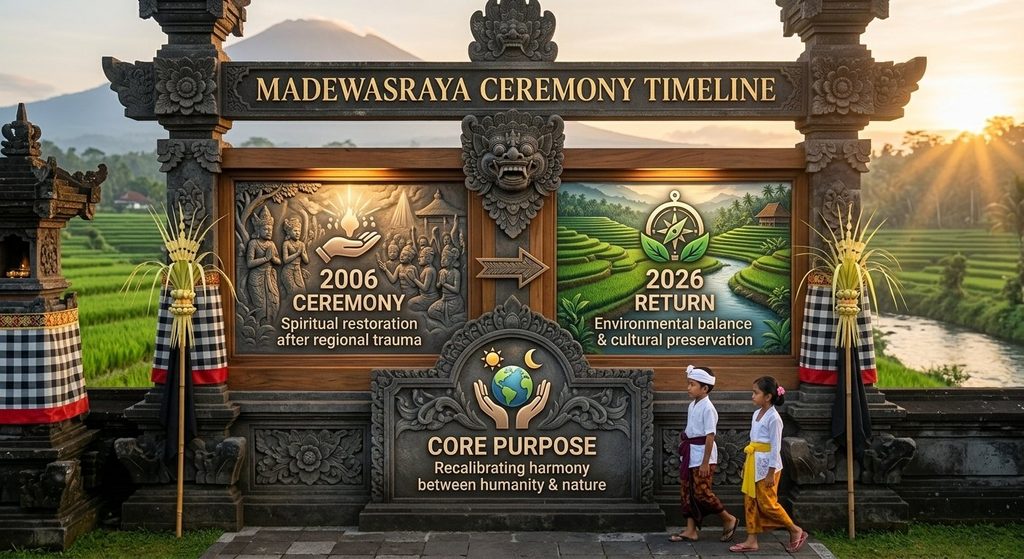
Bali was emerging from the trauma of the 2002 and 2005 bombings. Tourism had suffered, and communities were searching for balance.
Madewasraya offered no political program or economic plan; its response was purely spiritual, seeking harmony between humanity, nature, and the Divine.
Twenty years later, Bali faces very different challenges. Over-development, environmental pressure, waste management, water scarcity, infrastructure strain, and cultural preservation have become urgent conversations.
Madewasraya returns not because someone simply scheduled an event, but because religious cycles indicated that the cosmological moment had arrived.
Reading the Cosmic Clock and a Single Reality
Instead of imagining one celestial clock striking midnight, consider overlapping rhythms—almost like a Venn diagram. When particular cycles coincide, they create moments with specific spiritual qualities.
Secular societies recognize that timing matters. Farmers understand seasons, sailors track tides, and financial markets follow cycles. Balinese cosmology extends this principle further by treating nature, humanity, and the spiritual world as parts of a single, interconnected reality:
- Visible and Invisible Worlds: Balinese Hindu Dharma sees physical and spiritual realms as connected.
- Sacred Nature: Mountains act as geological formations and sacred places.
- Holy Water (Tirta): Water carries chemical properties (H2O) while serving as holy water that cleanses, purifies, and connects.
- Temple Functions: Temples occupy physical space while connecting human communities with divine and ancestral realms.
This philosophy links directly to Tri Hita Karana—the three causes of wellbeing: harmony with the Divine, harmony among people, and harmony with nature.
When these relationships become disturbed, imbalance follows. Madewasraya serves as an extraordinary act of spiritual recalibration.
Sacred Geography: Microcosm and Macrocosm
The locations associated with the 2026 ceremony—Pura Tuluk Biyu, Lake Batur, the village of Abang, and Gunung Abang—hold deep spiritual importance:
| Sacred Element | Physical Reality | Spiritual Role |
| Mountains | Volcanic formations (Gunung Abang). | Represents the elevated, sacred realm. |
| Water (Tirta) | Lake Batur and local rivers. | Sustains life, purifies, and connects communities. |
| Temples | Pura Tuluk Biyu in Kintamani. | Connects physical spaces with divine energy. |
The journey of water from mountain peak to lake, river, irrigation channel, and rice field physically expresses Tri Hita Karana. What happens upstream affects everything downstream, uniting environmental responsibility with spiritual duty.
Balinese cosmology also connects the small world (microcosm) to the great world (macrocosm). An individual seeks purification, a family restores balance, and a village holds ceremonies. At exceptional moments like Madewasraya, entire island communities unite in prayer for Bali and the wider world.
Ancient Ideas in a Fast-Paced Modern World
Modern Bali runs at high speed. Flights arrive constantly, hotels measure occupancy, developers calculate returns, and algorithms dictate what millions see online. Everything encourages speed: build faster, travel faster, consume faster.
Madewasraya proposes a different approach: wait, observe, consult, prepare, and act only when the moment is right. Perhaps an island balancing rapid economic growth with environmental pressure can gain something by consulting a clock that measures more than money.
When thousands gather in Kintamani this September and October 2026, visitors will see temples, offerings, processions, and incense smoke. Beneath those physical elements lies an invisible architecture built on balance, nature, and spiritual responsibility. Sometimes the right response to uncertainty is not immediate action, but taking time to look inward and wait until the moment arrives.
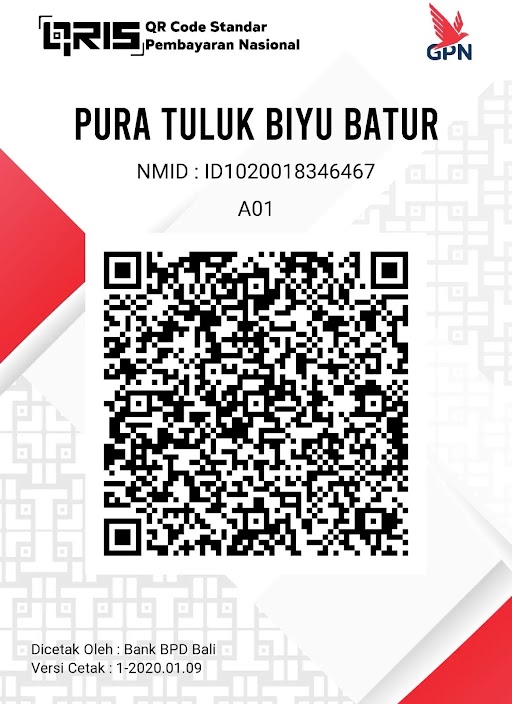
(Note: If you want to support Pura Tuluk Biyu directly, organizers welcome contributions via official temple QRIS codes.)